Extraction methods
Follicles can be harvested manually, with motorized devices (using continuous rotation, rapid oscillation, or vibration), or even via robotic assistance.
FUE · Jubilee Hills, Hyderabad
Experienced. Expert. Ethical.
Understanding techniques, tools, and trust
Welcome to our clinic, where medical excellence meets honest patient care. If you are researching hair restoration in Hyderabad, you have likely come across a dizzying array of terms, acronyms, and branded procedures.
Follicular Unit Extraction (FUE), recently updated by medical societies to Follicular Unit Excision, is the gold standard in modern hair transplants. Our goal is to cut through the marketing noise and give you the clear, medical facts so you can make an informed decision based on safety, expertise, and proven results.
The basics
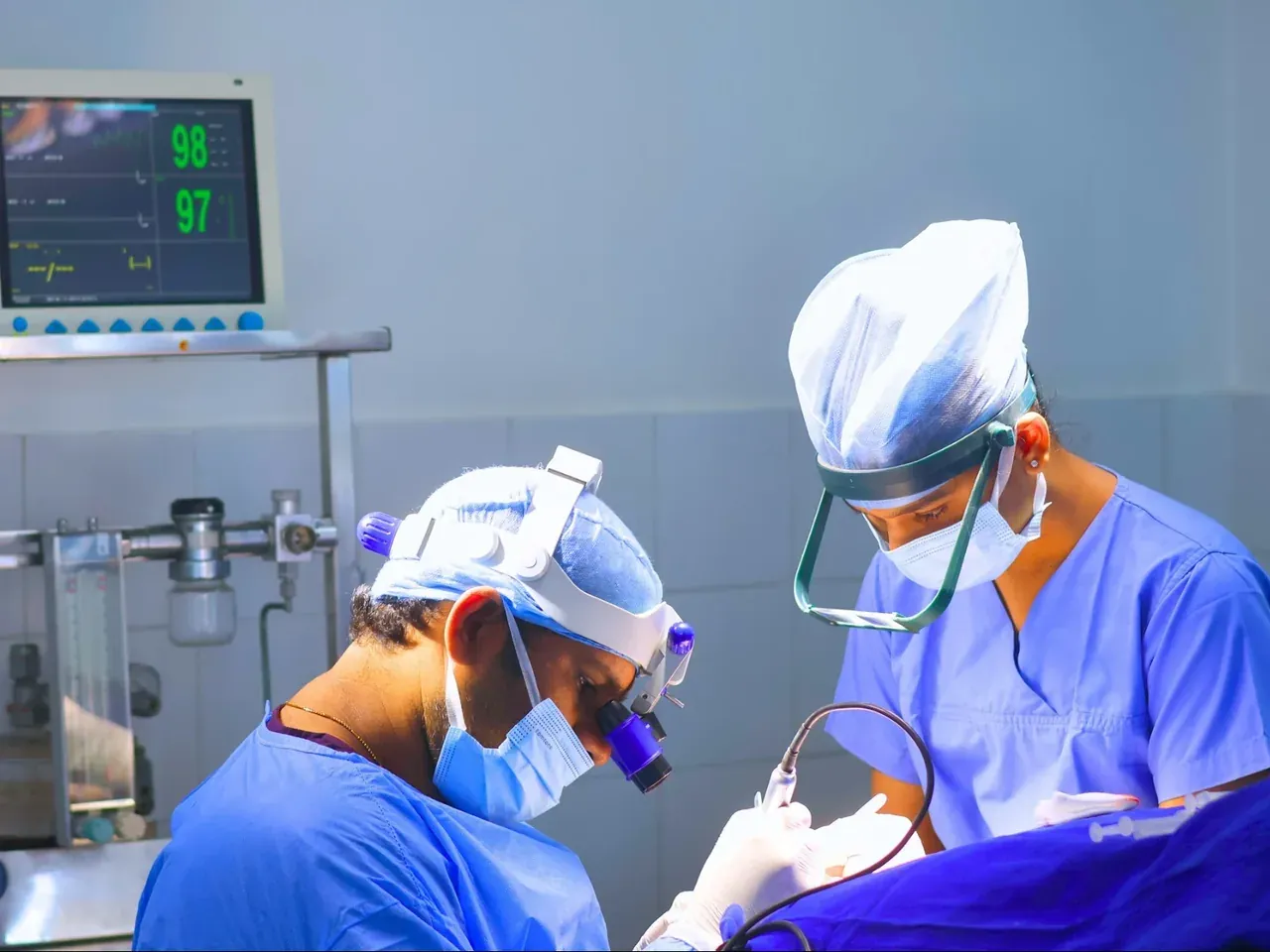
At its core, FUE involves isolating and removing individual hair follicles from a donor area (usually the back of the head) and implanting them into thinning areas.
While the basic steps remain the same, the exact way the procedure is performed can vary significantly based on the tools used:
Follicles can be harvested manually, with motorized devices (using continuous rotation, rapid oscillation, or vibration), or even via robotic assistance.
Surgeons use tiny, hollow circular blades (punches) ranging from 0.7mm to 1.0mm in diameter to score the tissue around the hair root.
Grafts are placed either into pre-made slits with fine forceps, or with implanter pens (often marketed as DHI). Both work well in skilled hands.
Modern FUE options
We keep our skills and instruments up to date through workshops and conferences, so we can offer every established variation of FUE. We then choose what your scalp needs, not what a clinic happens to sell.
Grafts are extracted one by one with manual or motorised punches, chosen to suit your donor hair.
FUE combined with platelet-rich plasma as an add-on, when it is right for you.
Grafts are loaded into implanter pens and placed directly. It is an implantation option within FUE, not a separate surgery.
Sapphire blades can be used for the recipient slits, sized for your grafts and the area being treated.
Disposable steel blades made on our own machine to match the measured length and width of your grafts.
Extraction, graft preparation and implantation are combined according to your scalp, donor area and goals.
Implantation
To place the hair back into the scalp, surgeons must first create recipient sites (slits). In our clinic, we utilize both sapphire blades and custom-cut steel blades to make these pre-made incisions, depending entirely on the patient's unique tissue.
One of the most important aspects of a successful transplant is ensuring that the microblade matches the exact size of the extracted graft.
Require very narrow, tiny blades.
Need slightly wider blades.
Require the widest blades.
0.7 mm to 0.9 mm blades. To achieve this perfect fit, we use blades ranging from 0.7 mm to 0.9 mm. Customization allows the doctor to tailor the length and width of each incision to match your specific grafts, ensuring a natural fit, faster healing, and good graft survival.
A distinctive feature of our centre
Grafts differ in size from patient to patient, and even within one patient. A standard off-the-shelf blade is not ideal for every graft. That is why we invested in a specialised machine that lets us make recipient blades ourselves, cut to the measured length and width of your grafts. A well-fitting slit lets each graft slide in without force.
No single best tool
With all these variations in technology, patients often ask: "Which instrument or technique is the best?"
The honest, medical truth is that there is no single "best" tool for every patient.
A highly capable and ethical hair transplant surgeon must have hands-on acquaintance with all instruments and a deep, scientific understanding of all techniques. Scalp elasticity, hair texture, follicle depth, and skin thickness vary widely from person to person.
Therefore, your surgeon must be in a position to dynamically decide which punch to use, which extraction method is safest, and which implantation technique will yield the best result for your specific grafts. The proper technique must be tailored to the proper patient according to their unique needs.
Surgeon-performed, not technician-run
In many clinics, technicians do most of the surgery. At our centre, the steps that decide your result are performed by our ABHRS-certified surgeons themselves.
Every FUE graft is extracted by Dr. Pathuri Madhu or Dr. P. Ram Sushruth, working under 8× Zeiss magnification loupes.
Our surgeon designs an age-appropriate hairline, plans how grafts are spread across the hairline, front, mid-scalp and crown, and makes every slit at the natural angle and direction of your hair.
Grafts are placed without squeezing, crushing or force, using the implantation method that suits your case.
Our aim is the best use of every available graft: a natural look, good coverage and visible density, not simply the highest graft count.
Every graft matters
FUE describes how grafts are taken out. What happens to them next matters just as much. At our centre, FUE grafts go through our ultra-refined graft preparation (URFUG), the same care our FUT patients have trusted for years.
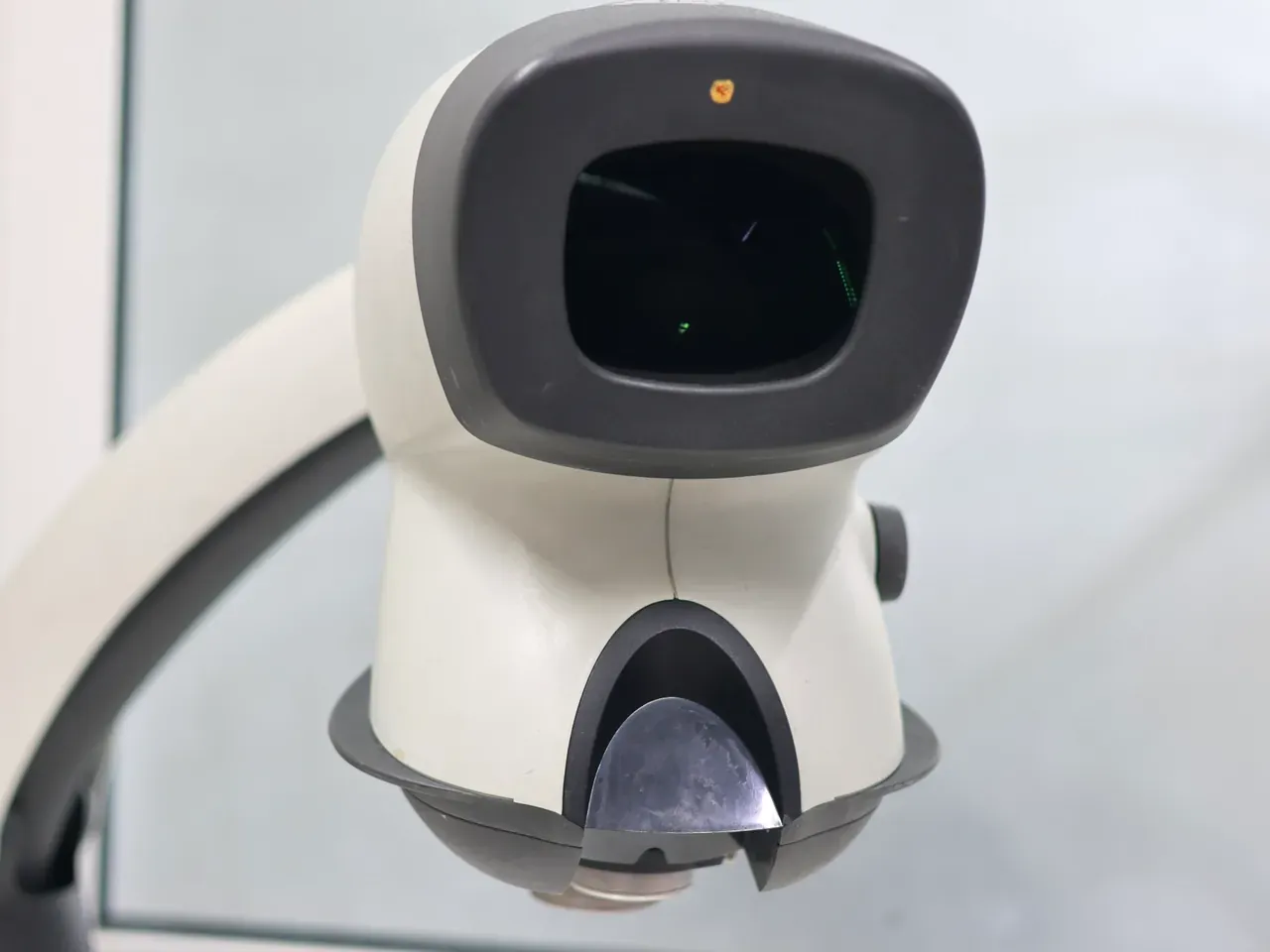
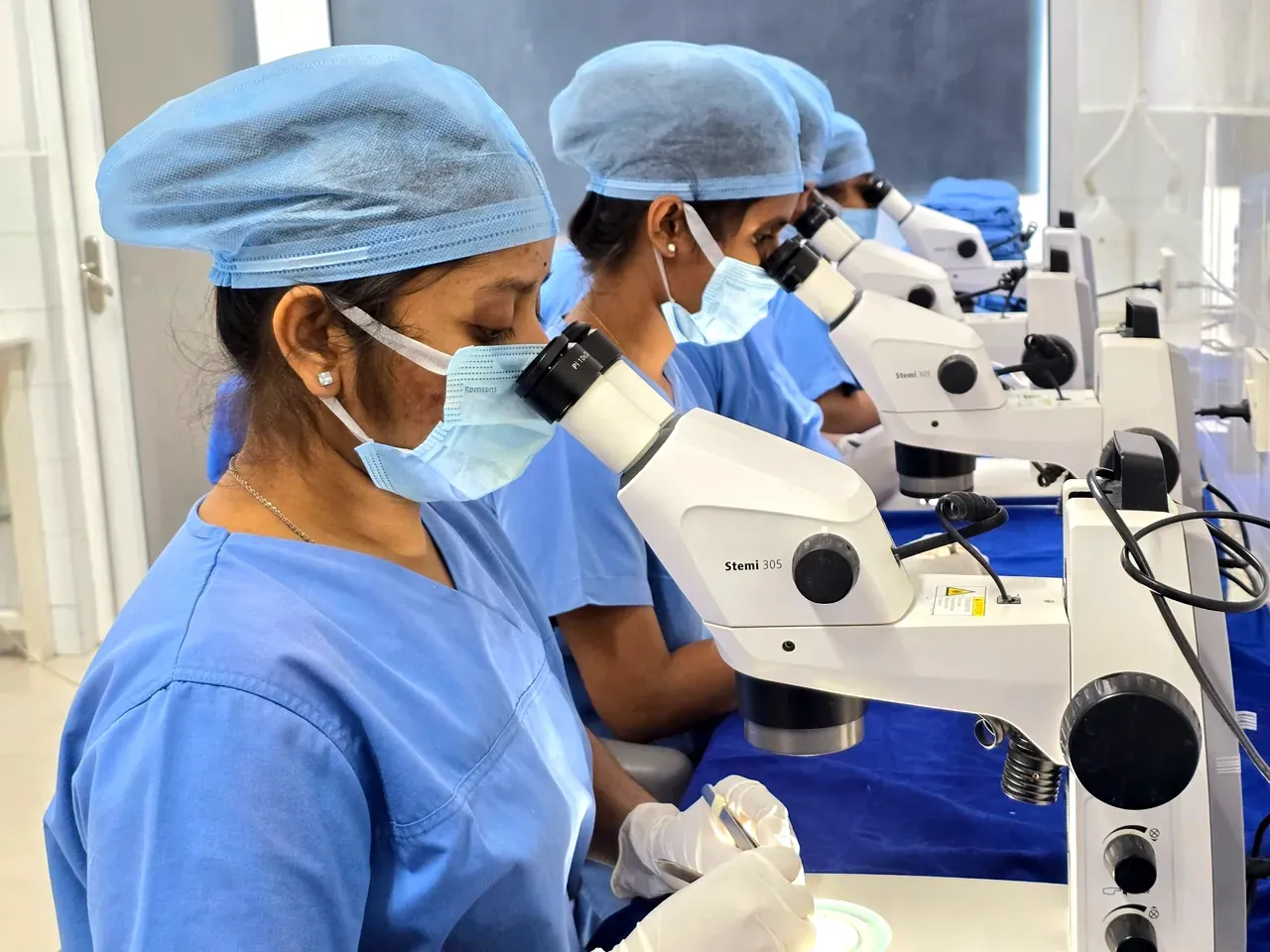
Count your grafts yourself. Refined grafts are laid out in custom steel trays of exactly 20. Your attendant can take part in the count, following sterile precautions, so you know exactly how many grafts you received. See how we count grafts.
Your surgeons
Performing FUE at this level requires mastery of every extraction and implantation technique. Patient care at our clinic is personally directed by Dr. Pathuri Madhu (31 years in hair restoration, and the first hair transplant surgeon in India certified by the American Board of Hair Restoration Surgery) and Dr. P. Ram Sushruth (an ABHRS diplomate with 7 years of specialized experience). Dr. Sushruth’s deep expertise in the finer aspects of FUE, combined with our clinic's pioneering legacy in ultra-refined FUT, ensures that every step of your FUE procedure is carried out with meticulous precision.
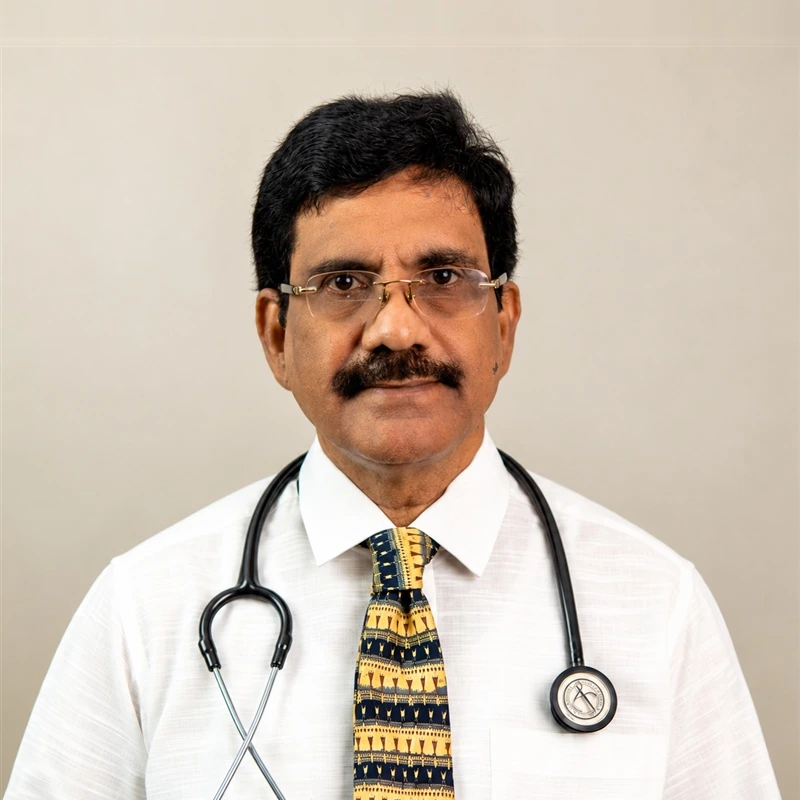
Founder and Chief Surgeon
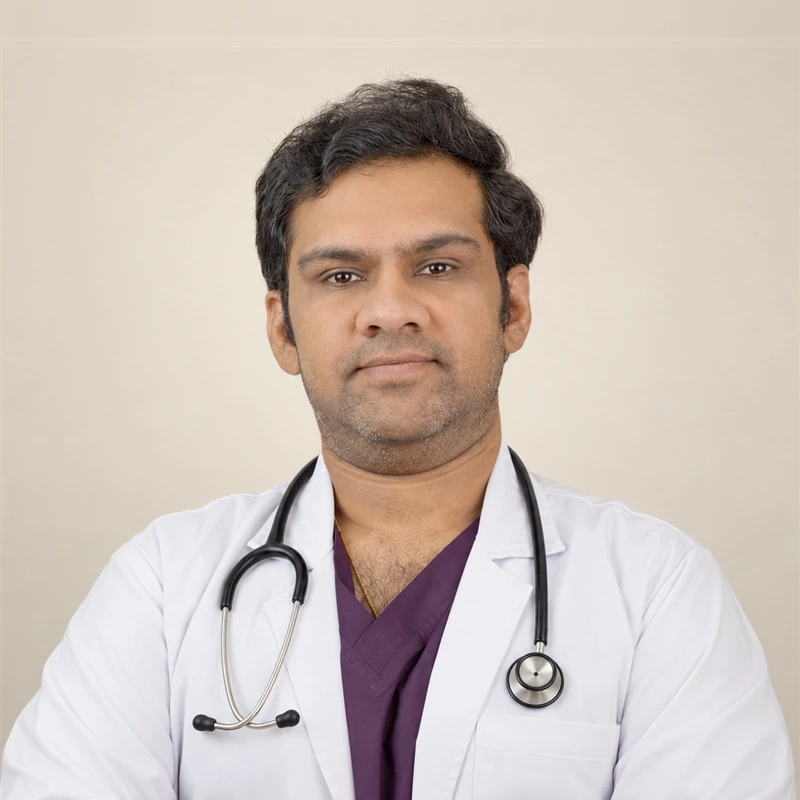
Hair transplant surgeon
An honest comparison
We perform both every week, so our advice is never tied to one method.
| Feature | FUE | FUT (strip) |
|---|---|---|
| How grafts are taken | One by one with tiny punches | One thin strip, divided under microscopes |
| Donor scar | Tiny dot scars, hidden once hair grows a few millimetres | One fine linear scar, hidden in the hair |
| Shaving | Donor area is usually shaved | Not needed |
| Best suited to | Short hairstyles, tight scalps, small to medium sessions | Large areas of baldness, long hair, limited donor density |
| Price at our centre | ₹75 + GST per graft | ₹60 + GST per graft |
For advanced baldness, both can be combined in one sitting. See combination FUE + FUT.
Our approach in Hyderabad
At our clinic in Hyderabad, we believe in patient education, not sales pitches. Your surgeon acts as a dedicated medical professional who takes the time to explain your specific condition and the customized plan required to restore your hair.
A true specialist will never push a procedure just because it has a flashy, trademarked name (like DHI) or a heavy marketing campaign behind it. The ultimate, shared goal of both the doctor and the patient is exactly the same: the best, most natural-looking, and permanent result.
Experienced. Expert. Ethical.
That's the standard we bring to every patient.
Real patients, real results
See before and after photographs of our own patients, and hear from people who have had their hair transplant with us.
Transparent pricing
We keep our pricing as straightforward as our advice. An FUE hair transplant at our clinic costs ₹75 + GST per graft, and a direct hair transplant (DHT, using implanter pens) costs ₹80 + GST per graft. Most patients need somewhere between 1,500 and 3,000 grafts, which puts an FUE total roughly between ₹1,12,500 and ₹2,25,000 + GST.
The exact number of grafts you need is not something we guess over the phone. It depends on how much hair you have lost, the density you are hoping for, and how many grafts your donor area can safely give. Your surgeon will work this out with you during your consultation, so you have a clear figure before you decide anything.
Because every graft is counted in trays of 20, you pay only for the grafts that are actually transplanted.
FUE hair transplant
₹75 + GST
per graft
Choosing a clinic
It is easy to get lost in the depths of technical jargon, instrument names, and marketing terms. Our advice? Don't overthink the tools; look at the hands guiding them. You do not need to worry about the technical depths of blade sizes and punch dynamics; that is our job.
When choosing where to have your hair transplant, look past the complex terminology and focus on what actually makes a surgery safe and successful:
Questions
This is a common misconception driven by marketing. Direct Hair Implantation (DHI) is simply a marketing term for an implantation method using "Implanter Pens." DHI is actually a step within an FUE procedure, not an entirely different surgery. Both implanter pens and traditional pre-made slit methods yield excellent results when performed by a skilled surgeon.
FUE leaves tiny, dot-like micro-scars, under 0.8 to 0.9 mm in diameter, in the donor area. Because we use very small punches (0.7 mm to 1.0 mm), these marks are very hard to see once the surrounding hair grows to a number 1 or 2 clipper length.
The surgery is performed under local anesthesia. You may feel minor discomfort during the initial numbing injections, but after that you should feel only minimal pain during extraction and implantation. Most patients watch TV, listen to music, or even sleep during the procedure.
Hair restoration requires patience. The implanted hairs will typically shed in the first 3-4 weeks (this is a normal part of the cycle). New, permanent growth begins around month 3 or 4. You will see significant improvement by month 6, with final, mature results visible at 8 to 12 months.
One of our hair transplant surgeons, Dr. Pathuri Madhu or Dr. P. Ram Sushruth, performs the extraction. Our surgeons also design the hairline and create the recipient slits themselves.
We have a specialised machine to make disposable, single-patient blades. Their size is chosen after measuring the length and width of your grafts, so each slit fits the graft that goes into it.
There is no single best technique for every patient. The surgeon chooses the extraction and implantation method according to your donor area, scalp, graft size and the result you want.
Bio-FUE is a name for FUE combined with PRP (platelet-rich plasma) as an add-on. Whether PRP is useful for you depends on your treatment plan.
FUE grafts at our centre can be prepared with our URFUG approach: they are examined under microscopes and excess surrounding tissue is carefully trimmed, while protecting the follicle.
No. Safe density depends on your scalp, blood supply, graft quality and donor reserve. Your surgeon decides what is suitable for you.
In-person consultations in Jubilee Hills, or an online consultation if you live outside Hyderabad.
Consultations all days, 12:30 PM to 6 PM, by appointment